Music
From the mathematical structure of a Bach partita to the neuroscience of what we hear, and the potential for AI to change the way we use music, our Confluence storytellers present a broad range of examples of how art, science and technology come together in music.

Damage is a part of materiality
Tod Machover, composer & inventorZoe Laughlin, materials engineer
The Glass Cymbal Project

Destructive testing and art
Tod Machover, composer & inventorZoe Laughlin, materials engineer
Michael Stern, The Glass Cymbal Project

Instruments are magical
Tod Machover, composer & inventorZoe Laughlin, materials engineer
Michael Stern, The Glass Cymbal Project
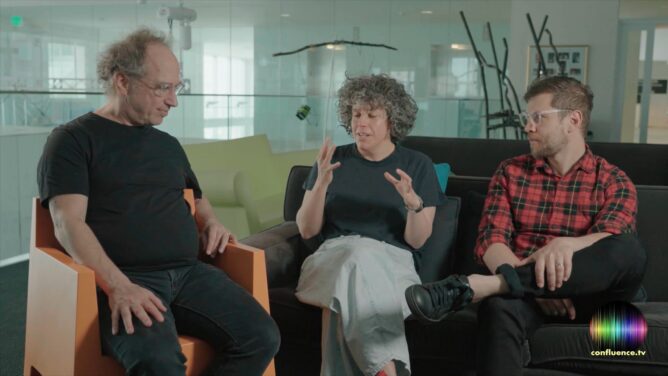
Making things is breaking things
Tod Machover, composer & inventorZoe Laughlin, materials engineer
Michael Stern, The Glass Cymbal Project

Our attachment to the cymbals
Tod Machover, composer & inventorZoe Laughlin, materials engineer
Michael Stern, The Glass Cymbal Project
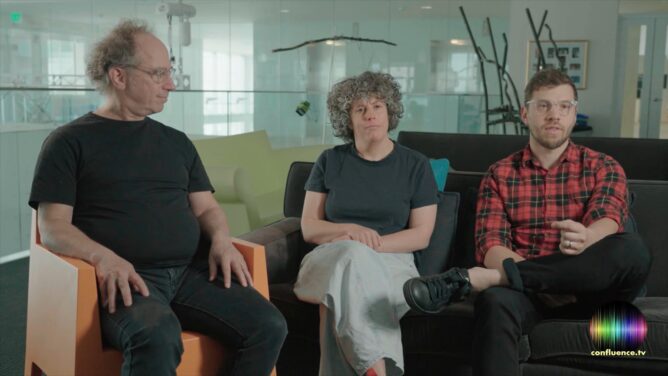
Our voices came together
Tod Machover, composer & inventorZoe Laughlin, materials engineer
Michael Stern, The Glass Cymbal Project
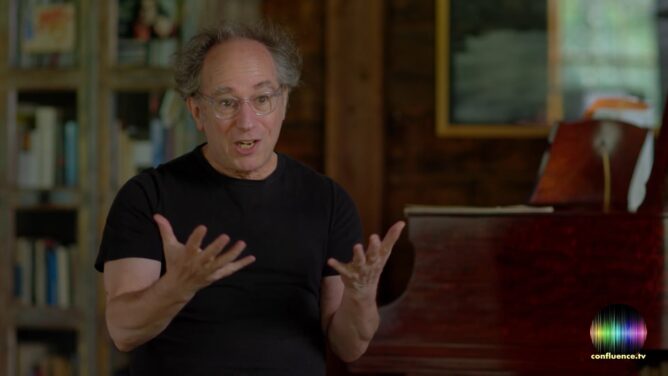
Beginning the glass cymbal
Tod Machover, composer & inventorZoe Laughlin, materials engineer
The Glass Cymbal Project

Exploring the cymbal store
Tod Machover, composer & inventorZoe Laughlin, materials engineer
The Glass Cymbal Project

Brainstorming and glass printing
Tod Machover, composer & inventorZoe Laughlin, materials engineer
Michael Stern, The Glass Cymbal Project

Printing the glass cymbals
Tod Machover, composer & inventorZoe Laughlin, materials engineer
Michael Stern, The Glass Cymbal Project

Zoe and Tod smash glass
Tod Machover, composer & inventorZoe Laughlin, materials engineer
The Glass Cymbal Project

Testing the first glass cymbals
Tod Machover, composer & inventorZoe Laughlin, materials engineer
Michael Stern, The Glass Cymbal Project

Completing the glass cymbals
Tod Machover, composer & inventorZoe Laughlin, materials engineer
Michael Stern, The Glass Cymbal Project