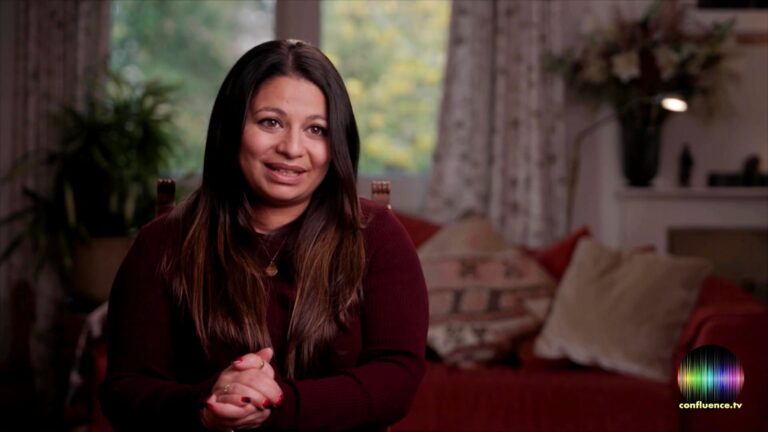
full interview_suze kundu_5.mp3

Suze Kundu [00:00:00] I'm Dr. Suze Kundu, I'm a nano material scientist and a big food fan.

Speaker 2 [00:00:09] Why don't we do it without the food print part, just in case we need it a different way.

Suze Kundu [00:00:14] I'm Dr. Suze Kundu and I'm a nanomaterial scientist.

Speaker 2 [00:00:18] What does that mean to be a nanomaterial scientist?

Suze Kundu [00:00:21] A nano-material scientist is effectively somebody that investigates all of the stuff around us. Now all the macro stuff that we see has been designed to precision, to be used in a specific way, in the best possible way. The dream of a nano- material scientist is to change fundamentally tiny structures on that very tiny, tiny nano-scale, so a billionth of a meter we're talking about, very, very small. Because those small changes give rise to massively different changes on the macro scale and so we can further design and tweak materials as we wish.

Speaker 2 [00:01:01] Okay, that's great, except I don't know what, what are you talking about when you say they've been designed? What kind of materials?

Suze Kundu [00:01:07] Absolutely everything around us is a material and everything has been engineered to serve a specific purpose, whether it's a chair, a piece of clothing, an item of food, something medical, and so all of these things have actually been designed through a thorough design process so that the texture, the robustness, the shape are all suited to their purpose.

Speaker 2 [00:01:33] Can you give us an example?

Suze Kundu [00:01:37] What can I think of? Okay.

Speaker 2 [00:01:39] It doesn't have to be food at all. It could be, but...

Suze Kundu [00:01:43] One example is using a material known as titanium dioxide. It's a white mineral powder. It's used in everything from washing detergent to sunscreen. But what we've been doing is tweaking some of its properties so that on the nanoscale, we can introduce a bunch of impurities to it so it behaves slightly differently. So when you create a thin film of this, it can do a couple of different things. It can be used for self-cleaning glass when applied to a pane of glass and so when sunshine lands on it, the ultraviolet light activates this material in a way that the pure form wouldn't necessarily manage to do. And when it's activated, it can do two things. It changes structure so that water can run down it in a continual sheet as it becomes what we call hydrophilic. It kind of grabs onto all of those water droplets and forms. Big wide sheets of water. The second thing it does when it's activated is that it's able to actually break down any dirt that lands on the window so what you're left with is self-cleaning glass which you wouldn't be able to do if you hadn't tweaked it on that nanoscale.

Speaker 2 [00:02:54] So when a scientist looks at food or looks at a meal, what does she see?

Suze Kundu [00:03:02] When a scientist looks at a meal, I think the first thing they see is something delicious. Scientists are, after all, humans. And food is one of life's pleasures. But when you start to dive into it more analytically, I think what you want to see is a variety of colors, flavors and textures. Things that are going to fire off not just all the different taste buds, but lots of different emotions and feelings as you experience that food as well.

Speaker 2 [00:03:31] Is that what happens with you? That's great, that was a really good answer. Do that and then just expand on, make it personal.

Suze Kundu [00:03:41] Yeah, I'll have to think about my favorite food. When a scientist sees a plate of food, I think the first thing they think is yummy, because food is one of life's great pleasures. But I think if you want to get more analytical, the things that you want to see on a plate of food are a variety of different colors, textures and flavors. These are all going to fire off, not just different taste buds in the mouth, but lots of different emotions. I do find that for me my favorite foods often evoke particular memories, things from my childhood like my mum's lamb curry, nobody can cook that the way that my mum can cook it. Through that to anything like even candy floss and desserts and sweet treats that I've enjoyed at different places at different times. I love that kind of introduction of story into food as well because I think you can really go through a journey. As you eat something, as you experience the different textures, the different flavors. A chocolate bomb is one beautiful example of that crisp, shiny shell of chocolate and the warm sauce is poured on top of it and as it melts away it reveals honeycomb, ice cream, different temperatures, different textures. All these things that are going to fire off differently in your mouth as you

Speaker 2 [00:05:03] So when you go out, like for example, as a filmmaker, when I go to the movies, I'm looking at it as a professional. Oh, that's what they did there, and oh, they screwed around with that. When you go to a meal, do you sort of, is there a little inner voice saying, oh, I know what the process was to cook this, to get this look?

Suze Kundu [00:05:20] Okay. Okay. Is that picking up?

Speaker 2 [00:05:24] It was then, the alcohol and what have you. Generally, generally, we will... Yeah, sorry, yeah. And if it's really a problem, like a helicopter, we will eventually tell you this. Assume that we're going to get it.

Suze Kundu [00:05:38] It's really talking about how I sort of appreciate the art of how the food and the science of how it's being cooked and the science of how it's being cooked.

Speaker 2 [00:05:44] This is actually about the science part of it. Do you look at food through the scientist's eye? Obviously you talked about it's yummy. But is it something that normally occurs to you? That this has been browned too much, or this has too much food coloring is added, or whatever it may be.

Suze Kundu [00:06:04] As a scientist, when you go out to enjoy a nice plate of food, whether it's a quick pub grub or a three-course, five-course or eight-course tasting menu, I think it's hard to escape the appreciation of the science that has gone into it, the way that the vegetables have been barely blanched so that they keep their color and their texture all the way through to some of the amazing and delicious reactions that food go through. One example is the Maillard reaction, which I think you will be hard pressed to find a more delicious reaction than the Mailleard reaction. It's known technically as a non-enzymatic browning, but it is the thing that releases flavor in all the things that you roast or fry. Everything from coffee beans to chocolate to steak and even French fries. They have that delicious golden brown effect on them. And that's not just to make them look enticing and pretty, what's actually happened is the chemicals within these food products have gone through a transformational process to create a bunch of new flavor chemicals, the chemicals that we just cannot get enough of.

Speaker 2 [00:07:18] Now, does every scientist know about the minor reduction?

Suze Kundu [00:07:22] I think most scientists know about the Maillard reaction, yeah, I would say, so it's hard to escape.

Speaker 2 [00:07:29] Okay, so that's kind of interesting because until you mentioned it about two weeks ago, I never heard of it. Really?

Speaker 3 [00:07:33] Really? Interesting.

Speaker 2 [00:07:35] So it's, well, because I just enjoyed it, I enjoyed the effect of it. So talk a little bit about that kind of scientific naming and then things that are better, are known in one sphere of the world and maybe not known by the general public.

Suze Kundu [00:07:49] Yeah, I forget what his full name is. It's Louis something Myard. My God.

Speaker 2 [00:07:55] Doesn't matter. Doesn't

Suze Kundu [00:07:56] some French guy. I don't want to do him a disservice, thank you. It's something like Louis Claude Maillard, I can't remember.

Speaker 2 [00:08:07] Yeah, just give me one second, because, yeah, sure, you should be able to see. We'll give him the n-

Suze Kundu [00:08:10] we'll give him the name check. I believe he was a medic, Louis Camille. I think he was also a doctor that dabbled with food as well, which is, again, we don't get much of that these days. I'll chat to you and you, but you. The Maillard reaction is reasonably well in scientific circles, and I do believe...

Speaker 2 [00:08:40] Let's start over again.

Suze Kundu [00:08:43] The Maillard reaction is reasonably well-known in scientific circles, but I do believe that everyone should know about this, mostly so that they can really apply the science to get it right and to liberate the most flavors from food. It's named after Louis-Kémi Maillards, who was a French doctor and somebody that dabbled with chemistry as well, and he wanted to extract all these amazing flavors from the food, and so he came about this way of browning meat to specific temperatures. So that they go brown, not so much that they're burning, but just so that you're getting just a golden brown. So you will know this color from the golden brown nature of a loaf of bread. The crust has gone through that Maillard reaction. Steak is a classic one that goes through one of the most delicious reactions, I think we can all agree. Now that browning effect comes from what we call the non-enzymatic browning of amino acids. And so the food product has to contain some sort of protein because when you break protein down, that's made up of amino acid. Now these combine with what we called reducing sugars and they create a whole host of brand new flavors. All those things that we find delicious about the crust of bread, about French fries, about steak, the delicious smell of roasting coffee beans. All of those flavors and scents are liberated through this reaction.

Speaker 2 [00:10:15] So we're going to go, and we're gonna film you doing it, but walk us through it. Not in too much detail, but just like, stove is heated, temperature is hot, steak goes in. Just tell us what happened.

Suze Kundu [00:10:29] I need to remember my numbers now, and this is a US thing isn't it, so we will need Fahrenheit. And I think it's something like 220 to 330, but I don't want to get that wrong.

Speaker 2 [00:10:41] We don't even need to be that specific, it's kind of like, it starts to sizzle. It's hot but not too hot, I think is what it is, yeah. It's not hot but it's not too much, it just starts to sizzle. You can see a crust forming, I mean, whatever, you know. Imagine this, like golf cars everywhere. Okay. This is an experiment because you'll be telling us in real time, but this is, it has been.

Suze Kundu [00:11:06] To perfect the Maillard reaction, you need to start with a hot pan, for example, if we're searing a steak. Now the pan needs to be hot, and we mean really hot, but not too hot, because what you want is for that steak to sear and sizzle. As it's going through this process where you do not want to be moving it around, this Maillarde process takes place. The amino acids from the protein within that steak are going to be combining with these reducing sugars also within the steak to form all these incredible flavors. Now you don't want to have your pan too hot because what can happen is you take it through to the next stage which we know as caramelisation. Now that tends to happen more with sugars so when you caramelize an onion you get that beautiful brown color which is not the Maillard reaction there's no protein involved there but we're taking it to the stage with browning it. However, what you don't want to do, is something I do too often, and my husband will complain about this, is to take it through to pyrolysis, which is what is more commonly known as burning.

Speaker 2 [00:12:16] What you just described is, there's a lot of precision involved in it.

Suze Kundu [00:12:22] You don't have to be too precise with the Maillard reaction because this is the best kind of science. It's the science that you can eat and experience. So what you want to do is follow your nose. If it smells good, you've probably nailed it. If it's starting to smell a little burnt and a little acrid, as you all know from frying onions, you know when you've taken them just that bit too far. But hey, it's science. It's all an experiment.

Speaker 2 [00:12:48] So that's a good question, that's good way to go to our next point is, you know, as you know our series is about art and science and how they come together in everyday life. So which is cooking?

Suze Kundu [00:13:01] That's interesting. Cooking for me is the chore. Cooking is a thing I avoid. Science is the thing I do. Food preparation. OK. That's an interesting point. I think when you think about it deeply, it is quite hard to define where the line is between science, art, experience. But I do think that that's quite reflective of culture. I think it's hard to find any aspect of culture that isn't somewhat underpinned by elements of science, whether it's the Lycurgus Cup in the British Museum that changes color with different lights. I mean, that's all down to nanoparticles, all the way through to Damascus steel. These are all historic artifacts and pieces of art that wouldn't exist without this almost anecdotal passing down of knowledge which fundamentally is science.

Speaker 2 [00:13:59] Talk about that. I've never heard that phrase said that way and it's brilliant, so anecdotal passing down of knowledge. And I mean this is the idea that Osmond talked about in the group, she said, I think she said in the group together, we didn't realize we were doing science.

Suze Kundu [00:14:16] Yeah yeah yeah that's i mean that's interesting though because i think the moment that you refer to it as science with me and i feel like i'm in my comfort zone refer to it as cooking and i fall apart yeah good luck later by the way that's going to be fun with that steak i hope you've bought a few

Speaker 2 [00:14:35] we have several. What about the art part? Okay just think about it you know is it is it you know art art writ large as a creative process science just talk a little bit about that that's when i said what i meant cooking i meant just this whole process of preparing food to be consumed whether you do it or whether you simply like me how does that work i enjoy it we're very lucky we're

Suze Kundu [00:15:01] There's the tasting and there's the visual as well. There is some, yeah I will, I'll ramble. There's cooking for cooking sake, for fueling yourself and that's the very functional way of doing things, but you still need to balance your flavors, you don't want to overcook your ingredients, you need it to be balanced and nourishing and delicious enough for you to want to eat it. But then there's the art. There's real satisfaction in having julienned every carrot to the same depth, the same length, to presenting your food beautifully, to having that range of flavors, of textures, of colors. I mean, there is science even within that. The variety of all of those things means that the elements, the minerals that we're taking in that are good for us are fundamentally more varied. And we do need a more varied diet, so if you can combine all of these things in one meal and make it really beautiful, I'm just getting hungry talking about this now.

Speaker 2 [00:16:08] So, you talked before about all this knowledge, you know, which creates this cooking and is this universal? Would you say that every culture has figured this out?

Suze Kundu [00:16:24] I feel you seeding my answer. I do feel that this anecdotal passing down of knowledge from generation to generation really is a global thing. I think what we need to do is discover a little more and record a little bit more so that we don't lose all of these amazing things that may not otherwise exist in any documented form and learn about how different cultures work with. The local produce that they have to cook sustainably but deliciously. We can learn so much. It's difficult in a city like London for example to not walk down a high street and find foods from almost every continent and that is brilliant. There's also so much we're learning about from food as well. We have a real fascination now with turmeric. As an ingredient but also as a kind of superfood. Now back in India they've been using turmeric for centuries and the rest, partly as flavoring, partly to liven up the look of their food but also, as a sort of antioxidant ingredient, as an antibacterial agent in food where you don't have refrigeration in a hot country. All of these things have been passed down and anecdotally. From mother to daughter and hopefully now to many many sons as well, thank goodness for me, and this is what's brilliant that we are learning about why all of these things have been brought together as well. So it's not just the look and the flavor but there can be practical reasons why we do things as well the history of pickling across the world is an incredible thing to look into. The ways that we cook different breads across the world. Every country in the world has its own bread. Every region within a country has its own bread and there's pride in that. And there's history behind that. And I think there's a real pleasure in finding out what that is as you eat that food because you can appreciate it even more then.

Speaker 2 [00:18:34] It's also, all those, they all came to essentially, and trust me, ceding the question here, feel free to touch that. No, I love it, no, I don't know. No, we're just talking about thinking about what we have and they all come to sort of scientific conclusions whether they're in Central Asia or in California about the process needed to make a bread that's not raw. So... It seems like everyone is somehow thinking scientifically, but not under that name.

Suze Kundu [00:19:09] Yeah. No, I like that. You direct beautifully. You're very, I love that. Yeah, you could herd cats, I like this. Um. I'm going to my college. Okay.

Speaker 4 [00:19:24] Very nice, very nice.

Suze Kundu [00:19:27] No, it's a skill. It's a... A skill a lot of people don't have, it is great. Um, okay, so... I think what's incredible is that if you look across the world at all of the different foods from all different cultures, historically people have been experimenting. They have tried something and it hasn't quite worked. So they've changed one of those variables and tried it again. Now one thing may have worked a little bit better, perhaps... The dough of a bread is a little less dodgy, but the crust isn't browning. They change one more thing, tweak it, try again. All of this is effectively the scientific method across time. And so I think that it is very hard to tease out the science from this history of cookery and of food.

Speaker 2 [00:20:15] That's great. So that brings us to the meal that you had in February, OK? Is that we need to, I'm just going to tell you the, so you can see. I do, yeah. The need to contextualize why we're going off to spend time with this cuisine, because we didn't go to Southern Italy, or go to Thailand, you know. And, um... Something about Tali, at least our feeling was that the presence of all those different foods and textures and colors was part of the point, okay, and that makes Tali special among dishes.

Suze Kundu [00:21:04] I think one perfect example of a rainbow of colors, a range of textures and a different sort of journey that you can take through all of these flavors is something like Indian Pali. It literally means plate and you have a large plate with all of the small bowls of different dishes. And if you work your way through all of these different dishes one by one but mixing and matching because you know it's all subjective. People can enjoy food the way they want to. You are taken on a culinary experience so not only is it an incredibly balanced meal, it's beautiful and enticing. It's a long meal. It's the kind of meal that you tend to share with people. You wouldn't necessarily grab a quick Harley for lunch. You would want to share that with family, with friends. And so as you work through the journey on your plate, you start to share that experience with different people and it gives you time to really appreciate and enjoy it in a very mindful way, I think. But what's lovely is that there is such a range within that and the different dishes and the science that has been deployed to create all of those things to perfection is very hard to escape.

Speaker 2 [00:22:31] Lots of different signs. I mean, I love a burger, but a burger is sort of one big thing, one complex but big thing.

Suze Kundu [00:22:37] A burger and chips is heavy on the my yard.

Speaker 2 [00:22:42] But the tally, I assume there's lots of different things going on.

Suze Kundu [00:22:46] There would be many different ways of cooking and different aspects of science deployed within a tali. You want to be cooking the rice so that it is flowing freely but not too sticky. So you want to manage the starch levels that you're releasing from that rice, you want to make sure that it's been prepared properly in terms of how it's being washed. There may be a dal dish and again you want be toasting those lentils, you want to be roasting the spices. Just to release all the flavors before you lay on top of that dahl. So you're really improving the flavor and the texture. You may have some prawns and you want to grill them delicately. Perhaps you may marinate them to soften some of the texture of the protein before you cook it and infuse some of that flavor. So all of these different processes, although you wouldn't necessarily label that a science, fundamentally are.

Speaker 2 [00:23:44] Great, do you remember the prompt?

Suze Kundu [00:23:46] I'll never forget those prawns. They're so homely, my mum cooks them the same way. It's great.

Speaker 2 [00:23:53] Do you remember why they were so great?

Suze Kundu [00:23:55] Yes, because they were cooked with love and science.

Speaker 2 [00:24:03] Okay. Yeah, I'm going to ask an interesting question. I don't think we're going to use it, but you ate, that was eight months ago. What do you remember from that meal, in terms of the cookie?

Suze Kundu [00:24:16] Things I remember from our thali meal was the range of textures and flavors. The standout dish for me was still the tangra jingri, the prawns. Again because they were cooked to perfection. They had the little bits of charring, they had a delicious delicate sauce on top of them just hanging off them. But for me, the yumminess and the accuracy of how they were cooked evoked memories for me. It's exactly how my mum still cooks her tangra jingri. And I love that because it takes me back to a time. I also think that the fact that that meal was shared with people, it was the perfect example of bringing people together with delicious food and everybody finding that commonality, that humanity. We wouldn't stop talking and I think I'll always take that away as well. It was a really lovely meal.

Speaker 2 [00:25:20] Have a look.

Suze Kundu [00:25:21] It looked so good as well.

Speaker 2 [00:25:25] That's part of all this, right?

Suze Kundu [00:25:27] Yeah, I can go for the color and the texture again. I'm conscious I'm repeating, but you can edit. You can edit! Don't worry about it, don't worry.

Speaker 2 [00:25:40] And as you know, we didn't get to eat it. We went back several days later and ordered some of her food. Fasten.

Suze Kundu [00:25:47] That's a long wait. Oh my goodness.

Speaker 2 [00:25:49] It was funny because after you guys left, the camera man took pictures, apparently as soon as he took a picture of something, he would eat it.

Suze Kundu [00:26:01] Oh, brilliant, brilliant. Just to make sure that he's marking it as done.

Speaker 4 [00:26:10] You get a poorly cooked steak by me.

Suze Kundu [00:26:17] Oh fair, that's it. That's happening.

Speaker 2 [00:26:19] That was wonderful about the processes of the people, but obviously we're filming and it looks amazing.

Suze Kundu [00:26:30] Yeah yeah I can say that too. The beauty of Tali is not just the journey that your taste buds go on but it's also the balance of colors, textures and flavors and there is some science to that as well. You know that you're getting a balanced meal full of lots of different nutritional ingredients so you're nourishing yourself while also really enjoying the look feel and texture and flavor of all of these incredible dishes. I mean why just pick one when you can have several?

Speaker 2 [00:27:06] Is there a limit to, well actually I'm going to ask you this different way. Could a well-versed scientist, in theory, create a delicious meal without ever going in the kitchen themselves?

Suze Kundu [00:27:23] Is this specifically to me? Did Carl set you up to this? You know about this. He thinks it's hilarious that I'm cooking today. It does pose the question, could a scientist, with all the theoretical knowledge, cook a delicious meal? And I think the answer is a very flaky, maybe. I mean, I say flaky. Let's use pastry as an example. You can know exactly what to do to make a rough puff pastry. You can that you need to keep your butter cold. You need to fold it in and do your book turns. But there is the experience and the knowledge that comes with doing something and practicing it and doing it again. Somebody that has made that many times will be able to feel that and go, no, this needs to be chilled more. We need to put that in the freezer quickly. Or, well, this is actually a bit too hard. Let me keep it at room temperature for a couple of minutes to make sure that when I do the next roll and turn, it's going to be perfect. I'll be able incorporate the butter into it. The same goes for bread, the same goes I think for so many things that you can know how to do something but I don't think that necessarily gives you the tools and the experience required to make something amazing first time. It's a little bit like the saying, all the gear no idea. You really need to have tried things but I think that's just similar to science. You don't do an experiment once and it works. You learn the quirks of your equipment. You know that you need to perpet something a little more because some of it will get stuck to the sides and it may not be counted. You will know that when you transfer something you're going to be losing a small portion of that particular component. And again, all of that is experience. So I think there is an element of science within that as well, but it's knowledge and I think that is distinctly different but complementary.

Speaker 2 [00:29:31] Okay, um, I want to, I have a question we're going to ask you about the process of what's about the cooking, so maybe it's a good place to see if anyone else wants to pitch in questions. Yeah, well. And you'll look at me. Well, this is sort of an evolutionary question to some degree, I guess, you know. Um, there's always talk about how a primitive man, right, was sort of like... He had to he had to kill kill the animal because he needed to fatten this by it. Hmm, right? I mean without understanding necessarily that there was some science behind that But that's maybe why we like fried food or why we liked things that are you know have that that kind of a flavor Do you think do you put many any any any fucking any of that? I guess this gets back to, well you mentioned things across culture, but there's certain things that the people... It goes beyond even that. Like barbecue, you know, all over the place. Yeah. Why is that? It just kind of very, seems to me, very sort of essential human, and you eat your vegetarian... Liar for me. Yeah. Yeah. Yeah. You talk about that, and you're looking at me.

Suze Kundu [00:30:42] I don't know whether there is any sort of instinctive reason why we have all globally turned to, for example, searing meat to release the deliciousness held within. It could be that people often, if there is a deficiency in them, they will crave certain things. And it could be, that perhaps in experimenting with different ways of creating things, they realize will actually is feeling more delicious. I am experiencing this more positively than the way that we were preparing it before so let's keep doing this. But it could be as simple as just enjoying something different as well. There's also the aspect of preserving things. Cooking will prolong the life of something rather than you know compared to the raw component and without refrigeration and things that is important because if you have a a liter feed. Other people depending on that nutrition you do want to make the most of it and there's that sustainability aspect again making the most of the resources that you have. So I don't know whether it is some sort of animal instinct that that we crave certain things but certainly historically and scientifically if people do have deficiencies of a particular thing they will crave specific foods But this is... In this day and age when we know what's available to us and we have such a wide variety of things.

Speaker 2 [00:32:17] Thank you very much.

Speaker 5 [00:32:20] Yeah, so I just wanted to show it, just need to show you. If you are going to be a good baker, you really do have to follow the science of baking.

Speaker 3 [00:32:33] That's the science, yeah.

Speaker 5 [00:32:35] Would you, as opposed to sort of being a mad artist... The bucket chemist, yeah.

Suze Kundu [00:32:43] Can you speak to that? When we talk about the science of cookery, there is the element of buckets chemistry that you can apply to most foods if you're throwing a dish together. You can season it as you go along, but I would say that baking is probably the exception to that rule, because baking inherently has to be more scientific. The reactions that are taking place, for example, when you are creating a meringue, You need to be adding all the different ingredients at the right time. In the right proportions because otherwise you fundamentally will not be developing the sort of chemical structure that can robustly maintain a bunch of bubbles within a protein network, which is effectively what a meringue is. And so there is a level of science that you do need to employ when baking most things. I find scones an amazing exception though. You can do a lot with this compact white ruba.

Speaker 2 [00:33:55] But it's not something that the baker...

Suze Kundu [00:34:00] Necessarily know this science.

Speaker 2 [00:34:00] Understander, per se, yes.

Suze Kundu [00:34:05] If you spoke to a professional baker I think they would probably understand and acknowledge and celebrate the fact that actually a lot of this is down to science. In fact there's so much of a crossover now between baking and science, you'd be hard pressed to find a professional Baker that doesn't have quite a deep understanding of the science that's underpinning their art form and their professional work. If you were to speak to your average baker... You often have the conversations of, oh, I don't like science, but I do love baking. And it's quite nice to maybe peel back the curtain and reveal to them that actually, they're pretty good scientists if they can bake.

Speaker 2 [00:34:49] Well do you think that's a really interesting, interesting comment because does the fact that you label it science for an ordinary, theoretical ordinary person somehow detract from the magic of cooking? You tell your granny. That's really interesting. Your English granny. You know, you're practicing a certain kind of science and then she goes, no I'm not. I might take offense at it. You're not. Yeah.

Suze Kundu [00:35:18] That's interesting, yeah. Science has had a bit of a PR problem for a little while. And that's a shame when we think back to over 60 years ago when C.P. Snow had his two cultures lecture. He stated that science and art are both parts of culture, but they are moving further and further away. Now you're hard pressed to find people that won't be able to tell you what their favorite music artist is. What their favorite painting is. But that is this established aspect of culture. When you talk about science there can be sometimes some negative connotations associated with it and a bit of disengagement, a bit of distance. A lot of that can come from an experience they had in school, the fact that they may not have been nurtured in their particular learning style, or probably often the fact that science has to be taught a certain way, in a very pre prescribed way, where experiments are not really experiments, they're demonstrations and there's little room for creativity. I find this a real shame because scientific research has to creative in order to progress, in order to find novel solutions to big new challenges that we're facing as a society and as a planet. So, I almost wish that we can incorporate a little more of the creativity, of the magic, of the experimentation that people experience with cooking into the way that we teach science so that we prevent that disengagement from developing. I hope people wouldn't be offended if we say to them, hey, your baking and your cooking is actually just science. I would hope that people may embrace that and go. Well, okay, maybe, maybe I can do this, maybe science is for me, and, and be a little more interested and engaged in some of the dialog around science too. That's the dream.

Speaker 2 [00:37:25] So that was great. So in fact, what I want you to do, because you're the first person, I love this. First time, revelations. You said the teaching of science isn't creative. I don't think it is. So just doing that, let's take food off the table. Let's just talk pure science. Imagine this in another part of the show. That's not creative, but in fact science is enormously creative. That dichotomy. Do you want me to expand at all? You can expand a little bit, but the whole idea is that that's one of the things that might put people off during the education. That's their first encounter with science, right? And, you know, kind of the buzz-in-burter, and you have to do it exactly that way.

Suze Kundu [00:38:09] Yeah, yeah. I'll speak from a kind of UK perspective. Tell me afterwards if that reflects with a US experience or not. When we start school, we have lessons where nothing is particularly labeled. You'll be making something, you'll be building something. We're not labeling things as maths or art or engineering. And so this lack of siloing of all the subjects is a natural amalgamation. You're involving lots of different skills and lots of different bits of knowledge into creating solutions for things. As we get older, in the educational system, we start to silo and label everything. And you have your so-called creative subject, like art, like English, creative writing, creative in its name. And then you have science. And the way that science needs to be taught in school at the moment, because of resources, because of... Pupil management in an environment where you may be handling things that could be dangerous, you need to do a lot of damage limitation. And so where the creativity could thrive in science through these experiments, I think a lot is lost because the experiments that we do in school really are more like demonstrations. But that's a real shame because science and scientific research and discovery. Comes to life when you can be creative. All of the solutions that we enjoy today, whether it's the synthetic materials that we wear or the medicine that we take to keep us well, all of that has come about because somebody tried something new in science. And so I think my dream would be to allow more creativity into scientific teaching, because it's a shame that have to get to degree level at college or university to discover that. Because by that point, we've probably lost a huge trunch of all of those incredible ideas we could be making use of to solve the challenges that we're facing even quicker. There's a lot to be said for diversity of thought, and so I think we do have a responsibility to make sure that people are exposed to the beauty and the wonder and the magic of scientific research. Because I think a lot of people would probably be quite keen to be involved in it more. This is a constant bug of air though.

Speaker 2 [00:40:48] We lose so many people

Suze Kundu [00:40:52] That was a wonderful statement.

Speaker 4 [00:40:53] That was good, that was good.

Speaker 2 [00:41:00] No, no, the whole thing about siloing and all that is, we had an interesting, we were shooting at Google at the robot factory and there was a woman there as a choreographer, she was our little star, she's teaching the robots how to move because if they're too weird, people will freak out, these are robots meant to move on us. And she was talking to an engineer and the engineer said, oh I'm not like you Katie, you're so creative, I'm so creative. Thank you.

Suze Kundu [00:41:25] That's such a shame, because he's so creative in what he does. Oh my gosh, it's just a different, a different flavor of creativity. It's a shame. I think we really, we pigeonhole creativity as being music, art, dance, writing, and actually you can be creative in all ways of life, in all the things that you do. It is, yeah, it is a shame

Speaker 2 [00:41:54] And that's part of what we're, you know, we're making a film about.

Suze Kundu [00:41:59] Oh, bless her.

Speaker 2 [00:42:00] What is letting Gideon involve? She's having a landing somewhere. Oh, bless her. No, it's fine. No, this is great. And what I'm going to do now is... So you're going to go in and we're going to have fun in the kitchen. There we are. They're fire alarm in here. So this is what we brought. We've got steaks for you.

Suze Kundu [00:42:22] Lovely.

Speaker 2 [00:42:23] We've got eggs. I'll tell you, okay, oh good, I'm glad you didn't. Okay. Okay. We have marshmallows. Lovely. Okay. And then you've got your martini kit. Okay. Yes. Which we'll save for the end. Because at that point, we want Charles to be involved in those things. Yes. Of course. And I think he's coming for the drinks. Yeah, he's here for the martinis. And he's staying for the intercom. Because the drinks are what it's nice to get on set, I love it. So you kind of described my own reaction. But imagine that we're looking at an egg being dropped on the skillet. Okay, and you're narrating what's happening

Suze Kundu [00:42:58] OK, so if we're doing a fried egg, that's a bit different.

Speaker 2 [00:43:02] Well, won't you tell us about it?

Suze Kundu [00:43:04] And I would need to... Well, we don't need to go too scientific. Effectively, there's a protein in there that forms what we consider at the moment to be a non-reversible reaction, where it creates cross-links between long chains of molecules, which is why the texture changes, the color changes. Yeah.

Speaker 2 [00:43:24] Yeah, it's like why is it browning on the edge? What's happening there? We have two dozen eggs. You can cook them in different ways. Yeah, cook them different ways and talk about them. This is just for us. This is an experiment for us, just to see. And with a marshmallow, it is going to be...

Suze Kundu [00:43:44] Well, it's your Maillard and your caramelisation actually on that one, so you tend to get a bit of both.

Speaker 2 [00:43:54] We can just tell us about it a little bit. Can you talk to us a little? Well, let's wait till everybody's sold, and then we're going to. You can sit anywhere you... I'm here, this is Marius.

Speaker 3 [00:44:03] I've got a coffee to soothe my...

Speaker 4 [00:44:06] Oh, you're adorable. It's okay. It's no rush. It's not rush. I should be laughing.

Speaker 2 [00:44:22] We had that problem on Sunday. One of our talents neglected to tell us he wanted his cappuccino until we were ready to start shooting. And by UCL, nothing was open.

Speaker 3 [00:44:31] Yep. Yeah.

Speaker 2 [00:44:33] So we didn't give it to him, and he did great, and we went out to lunch to talk about the next steps, and he started talking asleep. Oh wow! I can't think of anything until I get my coffee. Oh my gosh. And we got him some coffee. Were they Italian? No, he wasn't Italian, I meant it all. He was really jet lagged. Oh gosh. He invited Friday, and I've never seen anyone... Fading away. If you play it, it will look hard.

Speaker 3 [00:45:02] Oh, no.

Speaker 2 [00:45:04] Good yeah, okay, so Shall we talk we can I want to get the minority again, but if you want to talk about eggs first, that's fine Any way you're going to cook them any way you think you can cook them that you can talk about

Speaker 5 [00:45:20] transformation.

Speaker 2 [00:45:22] When when you cook when you fry an egg

Suze Kundu [00:45:28] fried egg has a combination of different reactions going on within it. An egg is predominantly made of protein and proteins are fascinating molecules they're quite large molecules so as you apply heat they can start to change but not only change they start to link up so you have intermolecular bonding. Now, it's this intermolecular bonding that's... Changes your runny egg whites into something solid, but because the opacity is also changing, it's going from being quite translucent to being solid white as well. And that's again all because of what is going on at that nano and microstructure that is changing the way that the light is effectively interacting with this material. So it's not passing through it, but it's actually being bounced off it, which is why it looks white. It's a sort of similar situation with some slightly different proteins for the yolk, so that can go from quite a sort-of liquidy to a reasonably solid, depending on how you like your eggs cooked. But if you were to boil an egg, for example, you may remember there's that strange almost Blue, gray. Layer around a yolk and again that's actually a bunch of materials coming out of that yolk and settling between that interface layer. So if we think of a fried egg again, for me the most delicious part of a fried egg are those little crispy bits around the edges. I almost purposely slightly splatter the edges to get extra crispy bits. Now that is an element of this Maillard reaction. So the protein that we've already talked about, every protein is made up of long chains of amino acids. So it's a sort of smaller molecular component joined together, a little bit like building blocks. Now, as these react with the reducing sugars within the same material, the same ingredients, they go through this transformational process known as the Maillard reaction. It's named after Louis-Camille Maillarde, who is a French physician and chemist. And he was the first to discover that if you cooked food specifically containing proteins and amino acids at high temperatures, the transformational process that they go through creates a browning effect. And with that change comes a whole host of new flavors. So these new flavor chemicals are released. And you don't get them if you dont cook it at that high temperature. So one fried egg has a whole range of different chemical reactions going on, all culminating to create something delicious.

Speaker 2 [00:48:21] Marshmallows

Suze Kundu [00:48:23] Yeah, okay.

Speaker 2 [00:48:29] Imagine a marshmallow, which is what we're going to do. You're literally lighting one. Yeah, I see. But just imagine just the marshmallow. We just see the skewer of the thing, and a flame comes up, and it starts to do whatever it does.

Suze Kundu [00:48:42] Okay. If you've ever toasted a marshmallow, you're probably doing a whole host of different bits of science. If you're like me and you've thrown it into the flame too vigorously, it may set alight. Now that's not a bad thing. It can often be the powdered sugar around a marshmallow that's setting itself alight because it has all the things that it needs. It has a source of oxygen, a source of heat and fuel. So the fuel is in the sugar, the oxygen is in the air and the heat has come from the flame. Flames up very quickly and often sort of puts itself out, it disappears because the sugar burns away quite quickly. But the reason it sets itself alight so quickly is because that sugar is so, so fine and so the surface area available to burn is much greater than you would have in, say, a larger crystal of sugar. So that's one bit of science, but it's not the delicious bit yet, because the delicious bit comes in with the oozy gooeyness of the inside and the slightly almost charred crispness of the outside of the marshmallow. Now the inside is going from solid to slightly liquid because it's going through a bit of a change of state. It's going from being solid to a little bit liquid as it's being heated up, so adding more energy to it. The inside molecules are able to move a little bit more with that energy, so it goes a little bit wibbly. On the outside, however, marshmallows are made with a range of ingredients that can include a level of protein, and proteins are made of amino acids. Now when amino acids react with reducing sugars, they go through a process known as the Maillard reaction. Now this is the browning effect that you get that releases a whole bunch of delicious flavors. So some aspect, if you get the temperature right, of that toasted marshmallow will be extra yummy because it has gone through that process of releasing a bunch of new flavor chemicals. However, it can sometimes go a little bit too far because the high sugar content of a marshmallow can go through the caramelization process, which we know pretty well, through to pyrolysis. And you'll know if it's gone through to pyrolysis, because your marshmallow will not smell very nice because you have burnt it, so the chemicals have broken down.

Speaker 2 [00:51:10] It's one of the things, and I don't even like marshmallows, but it's one thing that as a child you figure out how to do it, to get it the right way, very young, there's not a lot of things that you can say that about.

Suze Kundu [00:51:25] Yeah, for me, toasted marshmallows came to me later in life. Daisy, did you grow up with toasted marshmellows?

Speaker 3 [00:51:35] I went to an American school. Oh, yes. In the UK, never.

Suze Kundu [00:51:40] It's not really a thing here, we did it on Brownie Camp.

Speaker 3 [00:51:44] I'm not seeing...

Suze Kundu [00:51:44] And that's the only time we did it, yeah.

Speaker 3 [00:51:46] Yeah. Crackers, ground crackers, and.

Suze Kundu [00:51:49] I didn't even know how to find a graham cracker because we would call them a grahame cracker because we pronounce things differently yeah it's you could do it with a digestive I think yeah

Speaker 3 [00:52:00] But yeah, they were trying to find marshmallows, so we just don't dare.

Suze Kundu [00:52:04] No, the big chunky ones that are really hard to find, yeah.

Speaker 2 [00:52:09] Okay. Do we need the steak again? No, I think we got the steak fine. You sure? Oh yeah. Okay. And then you'll do it in real time. Yeah. Okay. One thing I didn't ask you is about your work. Mm-hmm. Okay. Tell us something exciting that was exciting to you that you think back on as an exciting moment in your work as a scientist.

Suze Kundu [00:52:41] That's interesting. That's very interesting. I would say there are three different aspects of the stuff that I do that excite me. As a scientist I'm quite lucky because my career and my job are really varied. I started off as an academic working in the lab creating solutions for things. My particular solution was quite a big one and it's something that I still dabble with which is looking to nature to find solutions to the big challenges we face. I work on an area called artificial photosynthesis, where plants can capture sunlight energy to make their own food. We don't want to make food, but what is vital for our planet and our survival is to find a cheaper, cleaner, more sustainable fuel. And what we were trying to do is look at the photosynthetic cycle and the mechanism within and isolate a small part of it, whereby a water molecule is split. To make hydrogen and oxygen using the power of the sun. The point of it is that you isolate the hydrogen and use that as a clean fuel. Because when you burn hydrogen, you get water again. It recombines with oxygen in the air. So it's just a vehicle for this solar energy. There were things that frustrated me about traditional academic research, which is that we're held back by quite a lot of archaic processes. Of things that have always been done a certain way and don't necessarily progress culturally. And what I have learnt is that two things that make me happy are communicating science so that we don't just have science that's published and sits on a shelf, it has a chance of being translated into something useful and applicable for all. So I throw myself into science communication for the encouragement of the translation of research. And I also now work within industry, where we're creating technological solutions to different challenges that researchers face at different stages of the research cycle, whether it is finding grant funding, whether it's discovering prior art or particular journals to establish a literature analysis, all the way through to collaboratively writing research up, publishing research, and not just looking at citations within the field, but also understanding how people are engaging with your work beyond your field. Who is writing about it in news articles? Who is talking about it? Who is raving about your research on social media? To better inform the research that we are doing so that we know that the public care about it and that it will be more likely to be adopted by the public in order to help society. And so I straddle these three areas of research and science communication and using technology like artificial intelligence and machine learning to dive into research and really try and make it the best that it can be. So I'm in quite a lucky position that I get to do that.

Speaker 2 [00:56:09] As a scientist, my impression is that more than a lot of other professions, even more than our part, you really are part of this very long tradition of knowledge. Now, science is going to keep going, learning is going keep going. After your I'm sure there's questions you want to answer that aren't going to be figured out for 250 years, so we can go a little longer up, right? So what does it feel like as a scientist to be part of that continuous process? I don't know if it's something you think about.

Suze Kundu [00:56:48] To be part of the scientific community is to be part of a global, historic network. There's a sort of family tree of science and research. In fact, I think that was evidenced quite recently with the development of new vaccines for new diseases that we didn't know existed before. There was a lot of talk about... How quickly people worked to find new vaccines for COVID-19, for example. But there was no single team working on finding a solution and even if they were, a lot of the vaccines that were developed sit on this iceberg of research that came before them. Everything from the basic procedure of how to isolate something all the way through to actually better understanding the mechanisms of how some of these viruses work to enable us to engineer and design a vaccine in such a way that it would attack that particular virus. And so when we talk about these sort of single heroes of science, I think that does the whole research discipline a bit of a disservice, and I'm yet to find a scientist that has really owned that solo endeavor vibe because I think we're all so appreciative of the fact that research is global, research is collaborative and the best research happens if you learn from other disciplines as well. Cross-disciplinary research really is the way forward.

Speaker 2 [00:58:25] And speaking historically. How bad was the bus stop? I don't think you can hear it. I think everybody in my production will be able to kind of hear it It's not a problem. This is the last question. The historical piece. Impressive.

Suze Kundu [00:58:47] And.

Speaker 2 [00:58:49] I'll place it in the, you know, the lawn, the long, the one view.

Suze Kundu [00:58:56] For me, to have seen incredible heroes of science come before me and aspire to having even a fraction of the impact on the world. I think my only real hope is that as part of the work I've done, if I can make some positive changes, some contribution to the knowledge bank of research that will enable future scientists to build on that. And if I can work towards making it, on a personal level, a more inclusive culture to work within so that we're not losing the diversity of thoughts so early on, that will feel like success to me and real privilege to be a part of.